
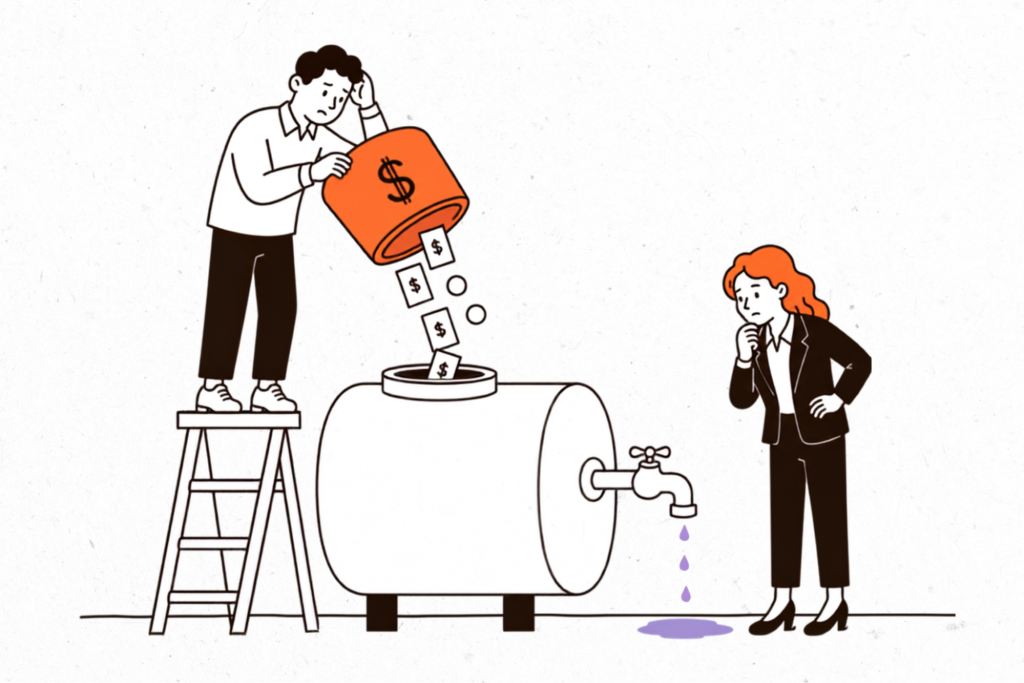
Many organizations have poured time, effort, and money into AI technology recently, and many of those investments haven’t turned into results. But if you or other members of your leadership team have begun asking why AI not delivering ROI Canada-wide has become the norm, you are not alone. Many Canadian businesses have implemented AI tools, but few have seen those investments turn into measurable value. The gap isn’t the technology itself. It’s what I call the AI Value Gap: the space between adopting AI and actually capturing value from it. It comes down to how an organization plans, trains, and governs adoption from day one.
This article breaks down the real reasons AI initiatives stall, then walks through a practical path forward for leadership teams looking for AI productivity professional services that actually deliver.
Why AI not delivering ROI Canada-wide has become the norm
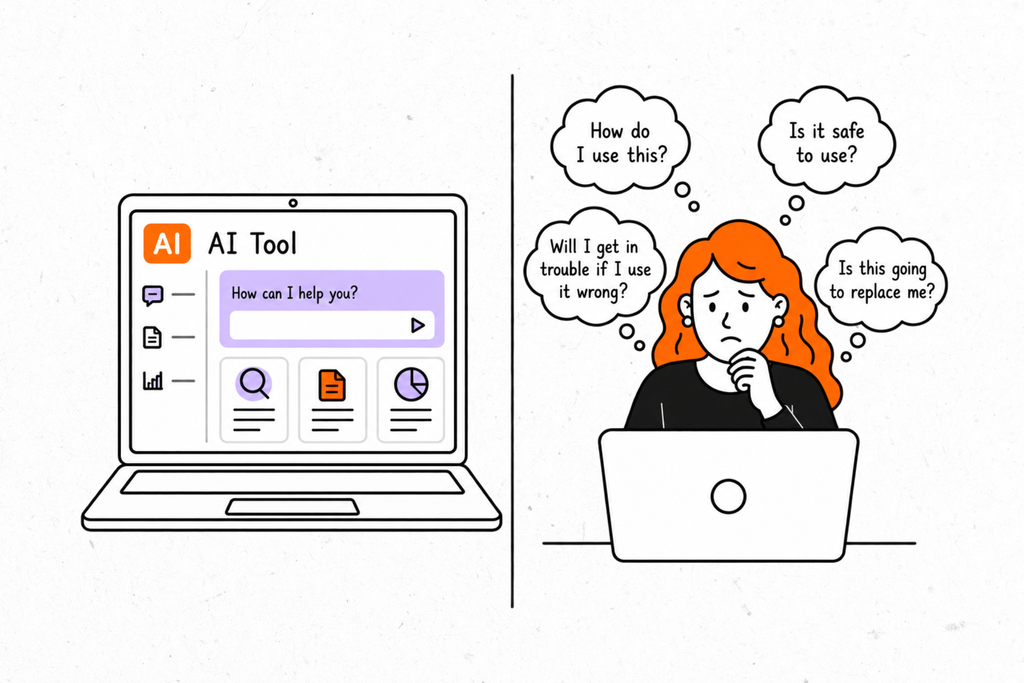
Many leaders understand that AI can create value, but they’re not sure how to turn AI use into real business results. Leaders often purchase a subscription for their teams, run one technical training, and hope that adoption will happen on its own, but it rarely does. Employees either try to use a tool without a clear idea of how to use it well or safely, or they completely ignore it due to being overwhelmed or unengaged. Without the right guidance, education, and guardrails, even well-funded AI efforts can fail to get any traction at all.
Many rollouts also focus entirely on access to AI tools and skip the human side of change. Teams need context on what a tool is for, what it should never be used for, and how it fits into daily workflows. They also need time and space to experiment safely and share their own ideas about how AI can benefit the organization. Without that context, AI adoption slows and leaders start to wonder what all this money spent is for.
The real cost of getting AI adoption wrong
Every stalled AI project carries a cost beyond the subscription fee itself. When AI adoption fails, teams lose time learning tools they never end up using well. Leadership also has to rebuild trust and rethink how AI fits in the organization before trying again.
This is how many organizations end up stuck in a cycle: AI is being used, but it isn’t delivering the results they’d hoped for. This is why many reports point to AI not delivering ROI despite being used by many organizations.
For firms offering professional services, the stakes can run even higher. Client-facing consultants and advisors need dependable tools they can use with confidence in front of their clients. When accuracy slips mid-engagement, the cost shows up immediately, in front of the person paying for it. A poorly implemented rollout creates rework, inconsistent deliverables, and reputational risk.
Getting AI productivity professional services strategy right from the outset protects both output quality and client relationships.
Building practical AI for professional services Canada firms actually need
The fix starts with readiness, not more software. Organizations that succeed with AI typically follow three steps:
1. Assess where the organization stands: Look at what gaps or pain points exist today where AI can realistically free up working hours. Next, look at what needs protecting in order to prevent AI from creating risk.
2. Train people, not just tools: Leadership and the rest of the team should engage in hands-on sessions that build confidence with AI, show what good AI use looks like, and how to use it safely. Leadership should go first, to show the team that it’s safe to experiment with AI and to demonstrate what good use looks like at their organization.
3. Set guardrails and measure outcomes: Make achievements visible. Spotlight team members who are using AI well, and create ways for the team to share strong use cases alongside easy-to-remember guidelines for using it safely.
These are the kinds of things an AI productivity professional services consultant helps your organization put into practice.
Practical AI for professional services Canada looks different from a generic software rollout. Every industry carries its own risks and workflow quirks, and a one-size-fits-all session rarely accounts for that. Firms that skip this step often struggle to get real business results from their investments, while firms that build a tailored plan see faster adoption and a clearer ROI.
Aigility Hub built its AI Readiness Accelerator program around this exact gap. Rather than leading with software demos, Aigility Hub starts with people: their concerns and their existing skill sets, and shows where AI will provide the most immediate and long-lasting value.
How Aigility Hub helps close the gap
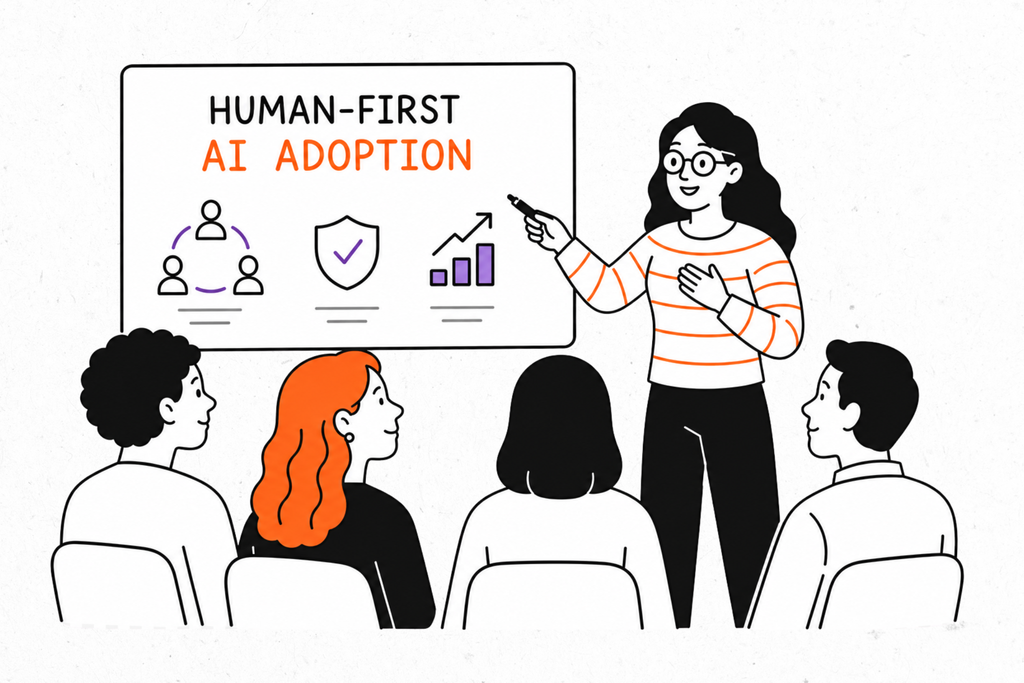
Aigility Hub’s human-first approach, built from 25+ years of business development and hands-on training, combines an AI readiness assessment with hands-on guidance. Organizations don’t just walk away with a plan on paper. They get practical, real-world implementation support built around their own goals and workflows, turning AI from a stalled experiment into a genuine driver of real business results.
What to look for in an AI readiness partner
Not every consultant offers the same depth of support. Look for someone who can help bring your whole team along and get everyone engaged and invested in using AI. Look for a partner who can help your leadership team decide where AI will provide real value in the organization, build a plan the whole team can rally behind, and set guardrails specific to your industry. Aigility Hub’s AI Readiness Accelerator program checks each of these boxes, pairing hands-on training with the kind of AI productivity professional services teams can measure in weeks rather than quarters.
Turning AI spend into real returns
Closing the gap between AI spending and AI results doesn’t require a bigger budget. It requires a clearer starting point. Organizations that assess readiness first, train people intentionally, and set measurable goals outperform those that jump straight into AI tools. For any leadership team wondering why AI isn’t delivering ROI, the answer is usually that the organization jumped into AI tools before their people were ready.
If your organization has invested in AI tools but still hasn’t seen the business results you expected, a structured AI readiness conversation is the next move. Book a free consultation with Aigility Hub and start building an AI adoption plan that actually delivers measurable results for your organization. Visit Aigility Hub to get started.
Frequently asked questions
1. Why isn’t AI delivering ROI for most Canadian organizations?
Many organizations skip straight into AI tools without getting people ready first, leaving teams undertrained and unclear on how to use AI tools effectively and safely.
2. How long does it take to see returns from AI adoption?
With a structured readiness plan and targeted training, many organizations see measurable adoption gains within a few months.
3. What makes professional services firms different when adopting AI?
Client-facing accuracy matters more, so firms need practical AI for professional services Canada guardrails rather than generic, one-size-fits-all training.
4. Does this program work for nonprofits and small businesses, not just large firms?
Absolutely. The AI Readiness Accelerator is built for SMBs and nonprofits across industries in Canada, offering the kind of practical AI for professional services Canada firms and nonprofits alike can put to use.
5. What’s the first step toward fixing a stalled AI rollout?
First and foremost, launch an AI readiness assessment to pinpoint shortcomings in workflow, training, team readiness, and guardrails before investing more time and money into an AI adoption program.


